You Don’t Need a Megaphone: What Active Citizenship Actually Looks Like
There is a version of active citizenship most of us have seen on the news. It involves crowds, banners, and speeches. It is loud, visible, and unmistakably public. And for many young people, it is also the reason they believe active citizenship is something that happens to other people.
A solid example is the “Gota Go Gama” movement during the 2022 Aragalaya (Struggle). Thousands of young Sri-Lankans spearheaded anti-government protests at Galle Face Green in Colombo. They organized food distribution, medical camps, and democratic debates towards effective nation building. The International Youth Alliance for Peace (IYAP) has had a front-row view of it.
A Personal Reflection
When I began working with IYAP as a Communications Strategy & Editorial Lead, I expected to spend most of my time writing about impact. What I did not expect was how quickly I would begin to witness it.
Within the first few weeks, I found myself reading volunteer reflections, reviewing programme reports, and speaking with young people who had quietly taken on the kind of responsibility that organizations spend years trying to cultivate. None of them called themselves activists. Most of them simply saw something that needed doing and decided to do it.
That observation changed how I think about active citizenship and it is the reason I wanted to write this piece. Because the most powerful form of civic engagement I have encountered here is not the loudest. It is the most consistent.
The Gap Between Knowing and Doing
Research consistently shows that young people between the ages of 18 and 35 are among the most socially aware generations in modern history. They are informed about climate change, inequality, conflict, and injustice. They care, and they care deeply.
Yet, a 2024 UNDP report on youth civic engagement found that awareness alone rarely translates into action. The SDG Progress Report reveals that despite near-universal awareness of the UN's 2030 Agenda, only 17% of the specific SDG targets are on track, with nearly half showing minimal progress or stalling.The most commonly cited reason was not indifference. It was uncertainty — young people simply did not know where to begin.
This is the gap that active citizenship is designed to close. Not the gap between caring and not caring, but the gap between caring and acting.
What Active Citizenship Actually Means
The term can feel abstract, so it helps to make it concrete. Active citizenship, at its simplest, is the practice of taking responsibility for the well-being of the community around you and doing something about it.
It does not require a title, a platform, or a formal mandate. It requires noticing a gap and deciding that the gap is, at least in part, yours to help close.
★ PULL QUOTE ★ “Active citizenship is not about being the loudest voice in the room. It is about showing up consistently for the people around you.”
This is the philosophy that shapes IYAP’s programming. Across 24 districts and in partnership with young leaders from diverse ethnic, religious, and social backgrounds, IYAP works to turn that philosophy into practical skill.
Five Ways Young People Are Practising Active Citizenship Right Now
These are not hypothetical examples. They are drawn from the kinds of stories IYAP encounters regularly through its programmes and volunteer network.
- Mediating a neighbourhood dispute before it escalates. A 23-year-old facilitator used dialogue techniques from an IYAP training to help two neighbouring families resolve a land conflict that had been building for months. No authority was involved. No formal process was triggered. Just a young person who knew how to create a space for honest conversation.
- Mentoring younger students through a difficult transition. A university student who had previously participated in an IYAP youth leadership programme began running informal peer sessions for secondary school students navigating the pressure of public examinations. She had no institutional backing. She simply recognised a need and chose to respond to it.
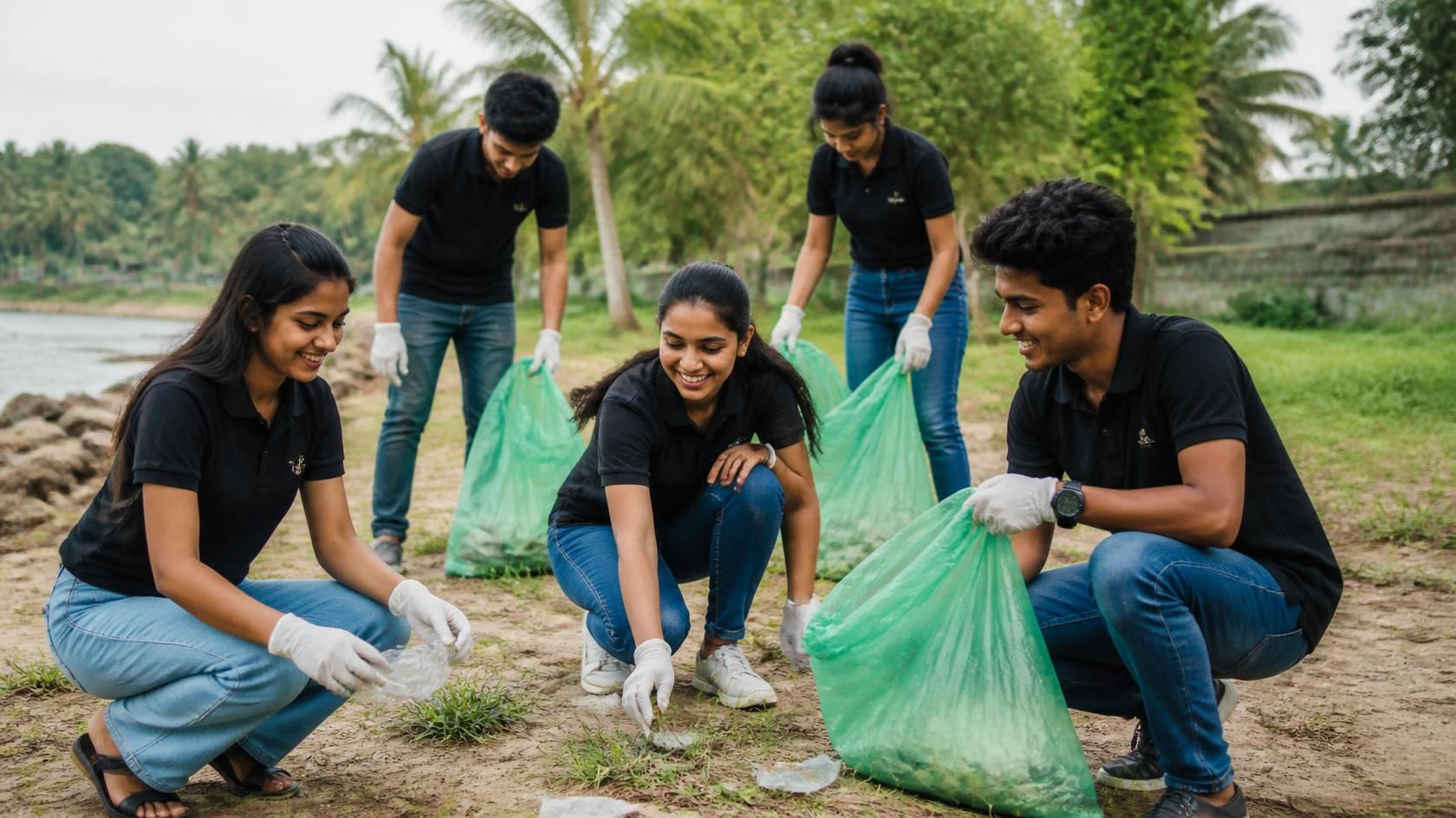
- Organising a community clean-up because no one else would. Three young men in a coastal district organized a weekend clean-up of a shared public space that had been neglected for years. What began with three people grew, through word of mouth alone, to more than forty by the following month.
- Running a peer support circle for young people facing similar pressures. A group of young women connected through an IYAP workshop created a monthly gathering for anyone in their community dealing with stress, isolation, or uncertainty. It costs nothing and is attended by dozens.
- Raising awareness on a local issue no one else is addressing. A recent IYAP intern identified a gap in public understanding about disability access in his district and created a simple, shareable infographic series that reached over 2,000 people organically within two weeks.
None of these stories made headlines. All of them - representative examples inspired by participant experiences, changed something real for the people involved.
The Connection to SDG 16
Active citizenship connects directly to Sustainable Development Goal 16, which calls for peaceful and inclusive societies, and accountable institutions. Youth participation is essential for building peaceful and inclusive societies because young people break down systemic barriers, drive social cohesion, and introduce innovative solutions that builds strong institutions. These institutions are then sustained by the citizens who engage with them, demand accountability from them, and fill the gaps they leave behind.
Youth-led civic action is not a supplement to institutional change. It is, in many communities, the mechanism by which institutional change begins. IYAP’s work rests on this belief, and the evidence from its programmes continues to support it.
Where to Begin if You Don’t Know Where to Start
The most honest thing to say to a young person who wants to act but does not know how is this: start with what is already in front of you.
Look at the community you already belong to. Identify one specific thing that could be better. Ask whether there is something, however small, that you could do about it this week. Then do it, and do it again the following week.
Active citizenship is not built from single dramatic moments. It is built from consistent, ordinary action taken by people who decided that the well-being of their community was worth showing up for.
★ PULL QUOTE ★ “The people who change communities are rarely the loudest. They are almost always the most consistent.”
Your First Step Starts Today
You do not need to wait for the right moment, the right platform, or the right amount of experience. Active citizenship begins with one decision — to notice something in your community and choose not to walk past it.
This week, IYAP invites you to take one simple action: identify one gap in your community, however small, and do one thing about it. It could be starting a conversation, offering your time, sharing useful information, or simply showing up for someone who needs support. The size of the action matters far less than the decision to act.
Share what you do with us — tag IYAP on social media or send us your story. Every act of active citizenship, however quiet, deserves to be seen. And if you are ready to go further, IYAP’s programmes are open to young people across Sri Lanka and beyond.
What IYAP Believes
The International Youth Alliance for Peace (IYAP) was founded on the conviction that young people are not simply the leaders of tomorrow — they are already leading today. Through training, dialogue facilitation, peer mentorship, and community-based programming, IYAP equips young people aged 18 to 35 with the practical skills and the confidence to act on that conviction.
Active citizenship is this month’s theme across all of IYAP’s communications platforms. Over the coming weeks, IYAP will be sharing real stories from young leaders across its network — stories of quiet impact, honest struggle, and the kind of consistent effort that changes things slowly and permanently.
If you are ready to act, IYAP’s programmes are open to young people across Sri Lanka and beyond. Learn more at iyap.global.
References
United Nations Development Programme. Youth Civic Engagement: Bridging the Gap Between Awareness and Action. UNDP, 2024. https://www.undp.org
United Nations. “Sustainable Development Goal 16: Peace, Justice and Strong Institutions.” UN SDGs, accessed 31 July 2026. https://sdgs.un.org/goals/goal16
International Youth Alliance for Peace. About IYAP. iyap.global, accessed 31 July 2026. https://www.iyap.global/about-us