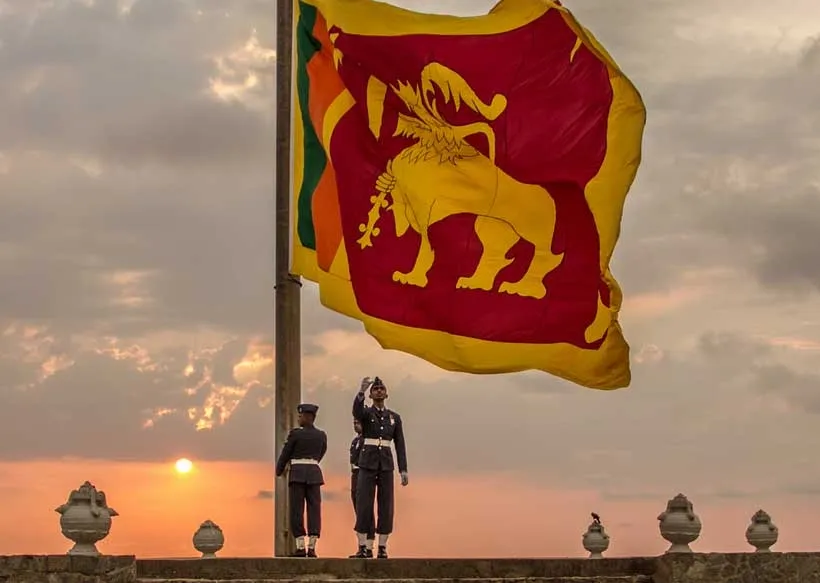
The civil war that ended in 2009 has left deep scars on the Sri Lankan. Peacebuilding has been a long and difficult process, inclusive of both failures and successes. When compared with the other states that are grappling with managing the aftermath of violence, Sri Lanka provides important insights and lessons to be learned. And that can help with understanding challenges in the delivery of post-conflict peacebuilding.
The Role of Truth and Reconciliation
In order to facilitate healing and reconciliation, Sri Lanka has devoted extraordinary attention to truth and reconciliation. One of the first phases of the journey has been to acknowledge the cost of the war and prepare to bring communities together. As per the mission of the "Lessons Learned and Reconciliation Commission" (LLRC), the commission that was created in 2010. Simultaneously, the degree to which justice for human rights abuse victims is attained is still some way off, although the work done by the LLRC certainly was an important step forward.
Truth commissions, such as the LLRC, are a key component in post-conflict countries. They provide a window to a reconsideration of human rights abuses, and to give a voice to victims of abuses. Further, they promote openness by working on public recommendations. When properly implemented, such programs help to stop the cycle of violence and repair a shattered community, finally leading to a community that is founded on mutual trust. However, none of these commissions’ independence, objectivity, or the political will of their recommendations lead to their success. The power of the LLRC in Sri Lanka has been diminished by its fragmented and inconsistent execution, resulting in many victims not having received justice or closure.
Transitional Justice and Accountability
For confronting the legacy of violence, transitional justice mechanisms (such as truth commissions, reparations, or legal adjudications) are required. Transitional justice endeavors in Sri Lanka have been episodic. Although the necessary steps have been taken, for example, programs relating to restitution and recognition of historical injustice, the climate of impunity has been sustained because the most violent offenders have been incapable of being properly prosecuted.
True justice cannot be achieved without holding the violators accountable for human rights abuses. Impunity damages both the foundation of lasting peace and reconciliation further fostering a lack of trust in institutions. Post-war communities such as in Sri Lanka have to develop separate and neutral judicial bodies to investigate and prosecute war crimes. Nations can aspire to a better tomorrow, in which justice and equality are preserved through a fair and dignified treatment of the past.
Community-Based Reconciliation
One of the most promising aspects of the peace process in Sri Lanka has been the grassroots reconciliation. Despite the top-down, governmental strategies, being frequently unsuccessful with regard to localized concerns, community-oriented projects have demonstrated effects. Institutions like local NGOs, women’s organizations, and interfaith networks are just a few examples of grassroots organizations that have been instrumental in the process of dialogue and reconciliation between divided communities.
Particularly, women have become important agents of change. They have driven work to support survivors of violence, restorative justice, and campaigning for gender justice and women’s rights. Thanks to women’s organisations social cohesion has been encouraged, psychosocial support has been offered and suitable safe spaces for dialogue have been established. Their participation is a sign of what inclusive peacebuilding processes can accomplish by involving marginalised communities.
Addressing the Root Causes of Conflict
In order to achieve stable peace, it is essential to address the root causes of the conflict. Discrimination, political disenfranchisement, and social inequity as well as chronic economic inequality were the primary causes of the war in Sri Lanka. In order for a permanent peace, these problems have to be resolved.
Poverty alleviation and income equality require funding, education, and economic development projects, especially in places that were hit hard during the conflict. Ensuring equal access for all citizens is one way in which Sri Lanka can address the root of injustice that perpetuates, hatred and polarization. In addition, strengthening governance and reforming the political system, in order to guarantee fair representation, are also indispensable processes for building inclusiveness and trust.
The Role of International Support
International involvement has helped Sri Lanka greatly recover post-war. Stabilization and reconstruction projects have gained significant financial assistance, technical help, and have steered political dialogue. Action by international players, however, should also consider the needs and aspirations of the people in Sri Lanka. Irrespective of the local situation, external actions carry the risk of fuelling conflict or undermining national sovereignty in relation to the peace process.
However, international support can be a force for strengthening domestically executed peace processes if managed effectively. This includes funding programs that address economic disparities, supporting transitional justice mechanisms, and offering expertise in institutional reforms. A delicate balance must be struck between supporting the local communities and empowering them to lead their own peace-building initiatives.
Conclusion
The practice of peacebuilding in Sri Lanka has underscored how challenging post-war reconstruction can be. Although some progress has been made, achieving stabilization, justice, and reconciliation remain intractable challenges. The importance of truth commissions, the need for transitional justice and accountability, the ability to work in the community, and the need to address the root causes of war, are some of the key lessons to be learned from Sri Lanka’s experience.
The role of foreign aid in fostering regional efforts while respecting national sovereignty also remains important. Sri Lanka may serve as a lesson that there is no single-size-fits-all solution for peace making and that each country’s situation requires tailor-made processes designed to address its specific needs. Post-conflict nations can adopt approaches that foster justice, healing, and sustainable peacebuilding for future generations by looking at Sri Lanka as an example.
References
Walton, O. (2016). Timing and Sequencing of Post-Conflict Reconstruction and Peacebuilding in Sri Lanka. https://doi.org/10.1093/acprof:oso/9780198757276.003.0023.
UN-Habitat. (n.d.). Good Practices and Lessons Learnt in Post-Conflict Reconstruction in Sri Lanka. UN-Habitat. https://unhabitat.org/good-practices-and-lessons-learnt-in-post-conflict-reconstruction-in-sri-lanka.
Institute for State Effectiveness. (2019). LESSONS FROM PEACEBUILDING AND RECONSTRUCTION EXPERIENCE A Background Paper for BUILDING FOR PEACE: RECONSTRUCTION FOR SECURITY, SUSTAINABLE PEACE AND EQUITY IN THE MIDDLE EAST AND NORTH AFRICA. Institute for State Effectiveness. https://effectivestates.org/wp-content/uploads/2021/03/MENA-Lessons-from-Peacebuilding-and-Reconstruction-Experience-ISE.pdf.
Raja, H. B. S. (2021, July 13). Sri Lanka’s Post-Conflict Reconstruction. Modern Diplomacy. https://moderndiplomacy.eu/2021/07/13/sri-lankas-post-conflict-reconstruction/.
Mallempati, S. (2022). Sri Lanka’s Post-War Reconciliation: Rising Concerns. Indian Council of World Affairs. www.icwa.in. https://www.icwa.in/show_content.php?lang=1&level=3&ls_id=7063&lid=4791.