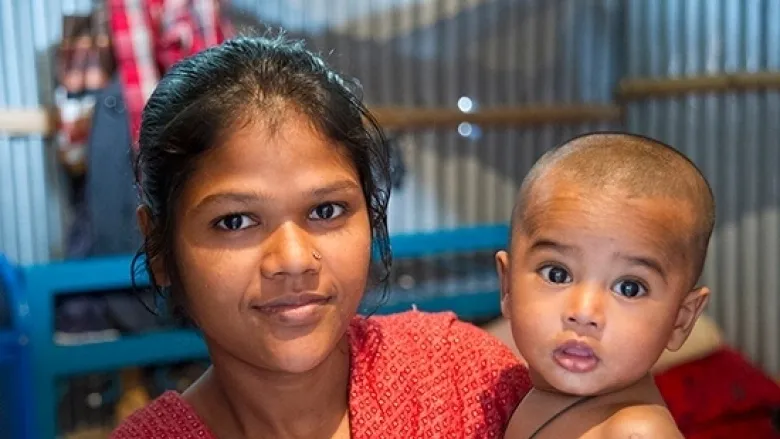
Child marriage is a global issue, and in Sri Lanka it is particularly common amongst poorer communities, where economic instability only serves to perpetuate the cycle of poverty and social alienation. Economic pressures force many families to marry off their daughters at a very early age in hopes of relieving some of their own financial issues. It is important to recognize the socioeconomic foundations of child marriage to create long-lasting remedies that can improve these societies and defend children’s rights.
Understanding the Economic Pressures Behind Child Marriage
“Child marriage remains widespread in many countries, with harmful consequences on girls and the entire society,” said Mr. Björn Andersson, UNFPA Regional Director for Asia and the Pacific. “We must do more and strengthen partnerships to empower girls through education, including comprehensive sexuality education, and equipping them with skills, while supporting communities to come together to end this deeply rooted practice.”
Child marriage is based on economic insecurity. Particularly in poor, minority communities where there is little or no access to education, medical care, and jobs that pay a living wage. Here, many families can barely support themselves, and another mouth to feed is just a burden. Marrying off a young daughter is sometimes perceived as a way to ease this burden, transferring responsibility to the husband’s family. This practice is not only a reflection of financial desperation but also a survival mechanism in environments where poverty and unemployment are pervasive.
The economic benefits that families believe child marriage brings are short-term at best. Dowry, the financial gift from the bride’s family to the groom, can be a significant expense. In marginalized communities, where money is tight, dowries can cripple family finances, especially if families have multiple daughters. Often, marrying off girl's young is seen as a strategy to reduce dowry expectations. Younger brides may be seen as more desirable, and thus the family may negotiate lower dowry payments.
Education and Employment: Two Sides of Economic Opportunity
- The Role of Education in Preventing Child Marriage: Education is often a powerful deterrent against child marriage, yet it remains inaccessible or undervalued in Sri Lanka’s marginalized communities. Schooling not only increases opportunities for future income but also delays marriage. Research consistently shows that girls with secondary education are less likely to marry young compared to those with little to no education.
- The Impact of Poverty on Child Marriage: Poverty keeps girls (in rural areas and economically poor areas) from the education they deserve. When attending school, there is the cost of transportation, books, and uniforms, which many families do not have the money for. And then there is also the issue of losing the potential income from a child that could be working for the house.
- The Impact of Educational Inequality on Future Prospects: For girls who lack access to education, the opportunity to enter formal employment is slim. Even with a primary education, jobs that provide a stable income and career growth are limited. In this context, marriage appears to be a more accessible “career” path. It is, however, an option that comes at the cost of personal development and self-sufficiency, leaving young brides economically dependent on their husbands and families.
The Cycle of Poverty and Limited Resources
Child marriage limits economic mobility and thus the cycle of poverty continues. Many young brides are condemned to a life of economic hardship because they are much less likely to complete school or acquire the skills to support themselves. They are kept impoverished (as often are their children) due to lack of opportunity. And plus, a lot of them are married off very young, which in turn makes them more likely to have a baby at a young age, and that is very dangerous for both the mother and the baby, especially in places where there is not very good medical care.
When a family is already poor, medical problems such as those that often accompany early pregnancy push them further into poverty. It is really bad for the young brides, because not only do they have few economic options or family negotiating power, but there is also very little chance to escape the social restraints that are placed on them.
Cultural Norms and Social Pressures
Child marriage has been a part of many cultures for generations and is also a way of keeping family honor. This practice is in many ways upheld by cultural standards. in more rural areas where the woman’s role is generally limited to that of a caregiver and wife. The stigma attached to the family if the daughters are not married by a certain age, so there is a lot of pressure to get them married.
This effect of tradition is especially strong in the lives of marginalized communities. since they are not exposed to other stories or possibilities. While more affluent areas may benefit from media campaigns and community programs against child marriage, isolated and impoverished communities are often left out.
According to the data from Sri Lanka’s Census and Statistics Department (2016), child marriages are prevalent among the Sinhalese, Tamil and Muslim communities. In Sinhalese registered marriages, there were 62,630 marriages among individuals aged 15-19 and 2,200 marriages involving children under the age of 15. Among Tamil registered marriages, 9,396 marriages occurred among those aged 15-19, and 372 involved children under 15. In the Muslim community, there were 11,916 marriages among individuals aged 15-19 and 471 marriages involving children under 15.
The Role of Policy and Community-Based Solutions
It is not simply a question of legal reform but of policy that addresses the economic disparities and social pressures that drive child marriages in Sri Lanka. The work needs to be about education, job training, and jobs for the poor. With programs specifically for girls, attitudes towards marriage can be altered and actual alternatives can be made available. For instance, scholarships and other community programs could give families enough incentives to allow girls to stay in school and find avenues for financial independence.
Community engagement is vital for changing mindsets. Religious and community leaders have great influence over many rural areas and with their support, the change of cultural norms can begin. The government and NGOs can work with these leaders to help educate people about the dangers of child marriage, which may include workshops on children’s rights, financial literacy seminars, and the provision of options that allow families to envision more than resorting to early marriage.
Conclusion
The cycle of child marriage in Sri Lanka must be broken and this can only happen with a continual effort to eliminate poverty and to empower those communities that have been marginalized. The economic factors that drive child marriage - poverty, lack of education, and limited employment opportunities - cannot be solved overnight. Keeping that in mind, if Sri Lanka chooses to pursue community-based, culturally aware, and economically oriented interventions, it will take a step in the direction of a world where girls can make their own choices and realize their full potential.
References
Goonesekere, S. & Amarasuriya, H. (2013). Emerging Concerns and Case Studies on Child Marriage in Sri Lanka. UNICEF, Sri Lanka. https://www.iccwtnispcanarc.org/upload/pdf/2501970655EMERGING%20CONCERNS%20AND%20CASE%20STUDIES%20ON%20CHILD%20MARRIAGE%20IN%20SRI%20ANKA%20%20.pdf.
Saxena, S. (2007). Child Marriage in South Asia: Brutal Murder of Innocence. Regal Publications.
Child Marriage in Southern Asia; Policy Options for Action. UNFPA, Sri Lanka.
UNFPA. (n.d.). Child Marriage and other Harmful Practices; A Desk Review of Evidence from South Asia. UNFPA. https://asiapacific.unfpa.org/sites/default/files/pub-pdf/child_marriage_and_other_harmful_practices_unfpa_apro_and_unicef_rosa_2020.pdf.
Manganara, J. (2016). Child Marriage - A Practice driven by Poverty. International Alliance of Women. https://womenalliance.org/child-marriage-a-practice-driven-by-poverty/.
Pourtaheri, A., Sany, S.B.T., & Aghaee, M.A. (2023). Prevalence and Factors associated with Child Marriage, a Systematic Review. BMC Women's Health 23, 531. https://doi.org/10.1186/s12905-023-02634-3.
Girls Not Brides. (2022). Why It Happens. Girls Not Brides. https://www.girlsnotbrides.org/about-child-marriage/why-child-marriage-happens/.
Wiratunga, S. (2023, July 3). Child Marriage: Breaking the Chains of Tradition. Groundviews - Journalism for Citizens. https://groundviews.org/2023/07/03/child-marriage-breaking-the-chains-of-tradition/.