
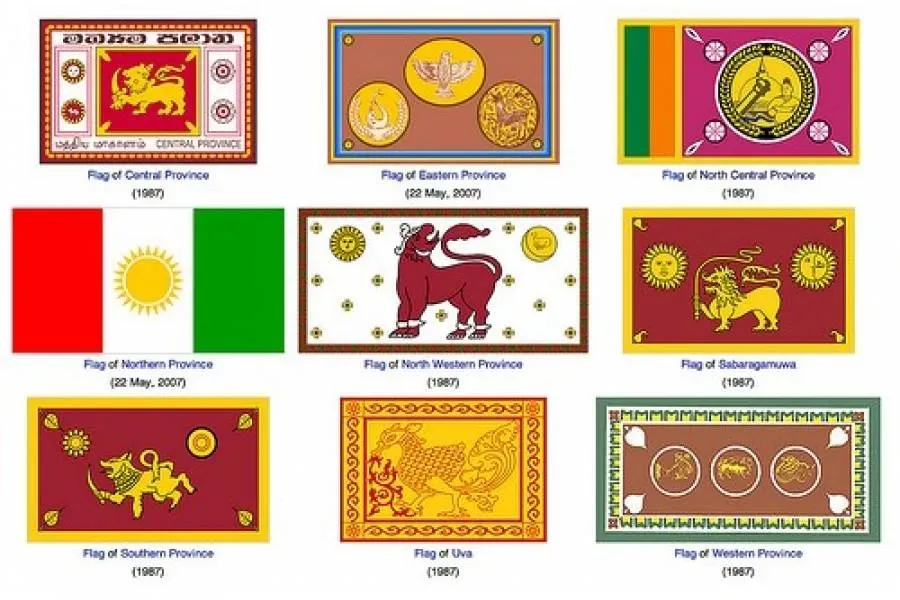
INTRODUCTION
Minorities in Sri Lanka, particularly Tamils kept on seeking self-determination since the time before the independence of Ceylon. After lengthy negotiations, the Provincial Council is the mechanism established by the government as an answer to their demand. The Provincial Council is a tier of government established by the 13th amendment to the Constitution of Sri Lanka in 1987. (The Constitution of the Democratic Socialist Republic of Sri Lanka, 1978). This was the product of a pact between Indian Prime Minister Rajiv Gandhi and Sri Lankan President JR Jayawardene, which is called, the Indo-Lanka Accord of 1987. (Indo-Lanka Accord, 1987) Although there is a belief that the Provincial Council was forced into the Sri Lankan Constitution by India, its supporters argue that it is a key political solution to the existing national issues between the central government and the minority community.
The principle of subsidiarity which is connected to democracy and autonomy, means that the social and political issues of a society should be dealt with at the most immediate or local level. (Wikipedia, 2024) When people seek power to deal with the problems which are directly affecting them, they have to be given the autonomy to determine it. That is what basic democracy is. If that is violated, that is considered a breach of democracy. It is a fundamental duty of the state to uphold peace and justice within its territory and devolution of power is a way to achieve it in a pluralistic country.
PROVINCIAL COUNCIL: AN OVERVIEW
The 13th Amendment devolves power at the provincial level by establishing a provincial council for each province of Sri Lanka with the primary objective of handing over the power over the domestic affairs of each province to the local population of the province while preserving the unitary nature of the state proclaimed by Article 2 of the constitution of 1978. (In Re the Thirteenth Amendment to the Constitution, 1987) While the constitution sets up the constitutional framework and function of the provincial council, the Provincial Councils Act No. 42 of 1987 supplements it by providing the procedures to be followed there.
The Provincial Council is the legislature of the province. Provincial Councils are elected for a term of five years unless sooner dissolved. Executive power at the provincial level is exercised by the Governor and the Board of Ministers, and in certain situations, directly by the President. The Governor is appointed by the President and exercises his powers as an agent of the President within the Province.
IMPEDIMENTS IN THE POWER DEVOLUTION
People of the majority community of the country believe that seeking federalism or self-determination is a kind of movement to divide the country. Politicians play a major role here in manipulating people with this false ideology for their political benefit. In the landmark case Chandrasoma V. Senathirajah, (2014) Supreme Court held that advocating federalism and the invocation of self-determination does not amount to a demand for a separate state.
Although the Provincial Council has exclusive power on the subjects under the Provincial Council list, the president can take over that power in emergency situations. The central government has the power to intervene in the day-to-day functioning of Provincial Councils such as allocating finance, assenting statutes by the governor, and approving procedures of provincial councils by the President. Whenever there are contradicting laws over the concurrent list the laws of the central government prevail. This undermines the power of the Provincial Council over the concurrent list.
Financial reliance is another major impediment. The Provincial Councils bear more expenditure responsibilities with poor means of income. Article 154R establishes the Finance Commission to make recommendations to the President on the national fund allocation from the annual budget to the Provincial Council. But there is neither direct provincial representation nor involvement in the appointments to the Finance Commission. Financial instability undermines the autonomy of the Provincial Council further.
PROVINCIAL COUNCIL ELECTION
The Provincial Council elections are to be held once every five years. (Gunasekara, 2023). The delay in holding the Provincial Council Elections has had some negative repercussions. First, it has deprived the people of Sri Lanka of their right to elect their representatives at the provincial level. Second, it has weakened the devolved Government system which the minority had received after a long struggle. Third, it has made it difficult for Provincial Councils to effectively perform their duties. However, the routine works are functioning under the complete control of the central government through the governor and secretary. Fourth, the delay has contributed to the erosion of public trust in the Government. (Gunasekara, 2023)
CONCLUSION
Although the establishment of the Provincial Council was given as an answer to the demand for self-determination by the minorities, it did not meet their demand even at a minimal level due to ineffective power devolution and its failure in proper function. The full constitutional extent of devolution that is possible under a unitary structure has not been realized yet. The government must take necessary steps to upgrade the Provincial Council which is still at the testing level even after 37 years. A genuine system of multilevel government that can address our challenges of pluralism, democracy, and good governance needs to be established. It will, on one end somewhat release the minority communities from the oppressive decision of the government and pave the way to uphold justice and equality. It would be a better initiative to find a solution to the long-existing issue between majority and minority communities and foster peace among them. On the other end, it will ease the administrative burden of the government and provide for the economic, social and political development of a united nation by resolving ethnic conflict.
References
- Chandrasoma V. Senathirajah, SC SPL No. 03/2014 (2014).
- Gunasekara, S. (2023, October 1). Provincial Council Polls: Delay affects governance and public trust. Retrieved October 16, 2024, from The Morning: https://www.themorning.lk/articles/k2pp5qNoufC9gIK32V0q
- In Re the Thirteenth Amendment to the Constitution, 2 SLR 312 (1987).
- Indo-Lanka Accord. (1987). Colombo: International Relations Programme, University of Colombo.
- The Constitution of the Democratic Socialist Republic of Sri Lanka. (1978). Sri Lanka: Parliament Secretariat.
- Wikipedia. (2024). Subsidiarity. Retrieved October 16, 2024, from Wikipedia: https://en.wikipedia.org/wiki/Subsidiarity#:~:text=Subsidiarity%20is%20a%20principle%20of,is%20consistent%20with%20their%20resolution.